Plant Care
African Violet
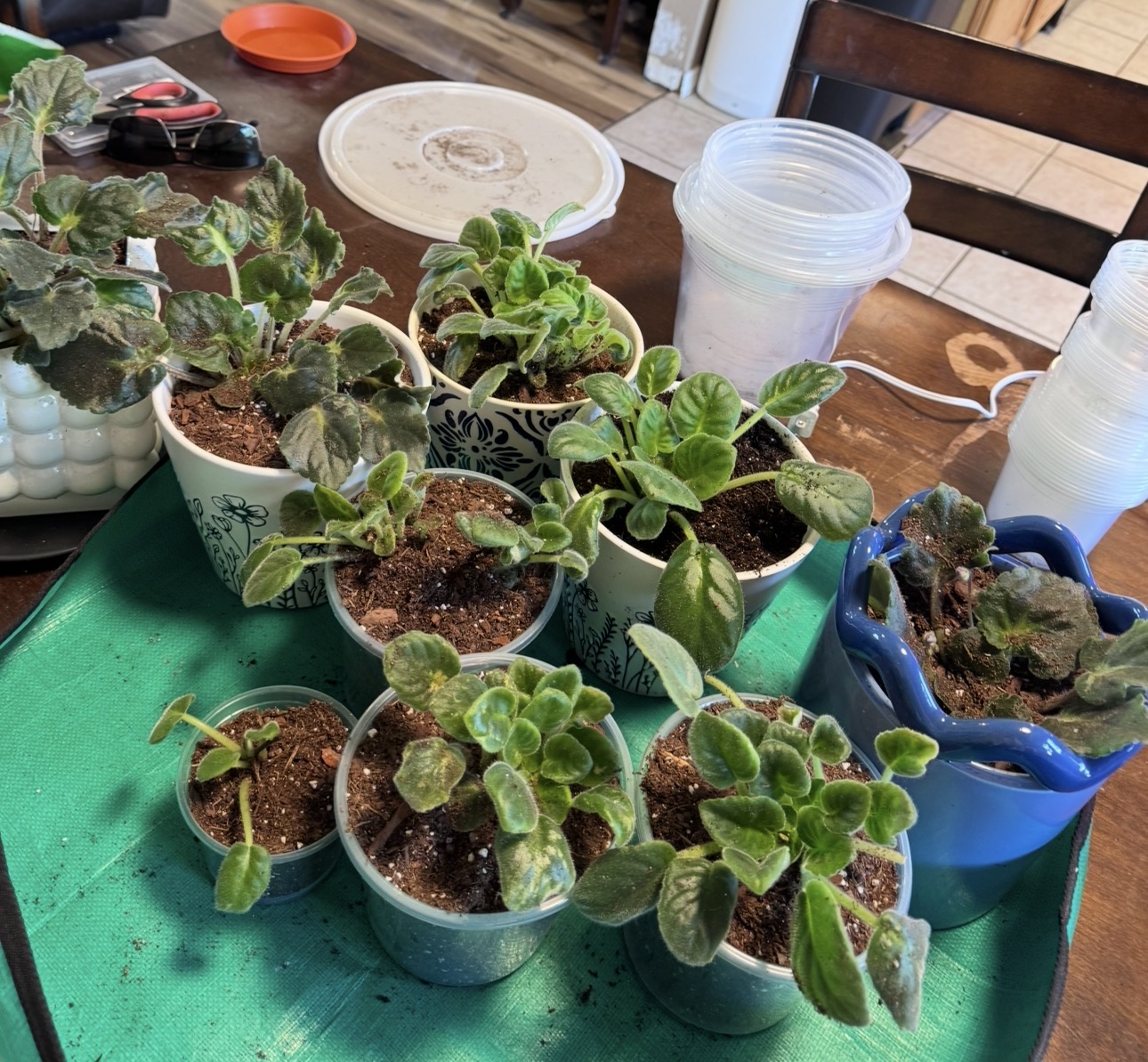
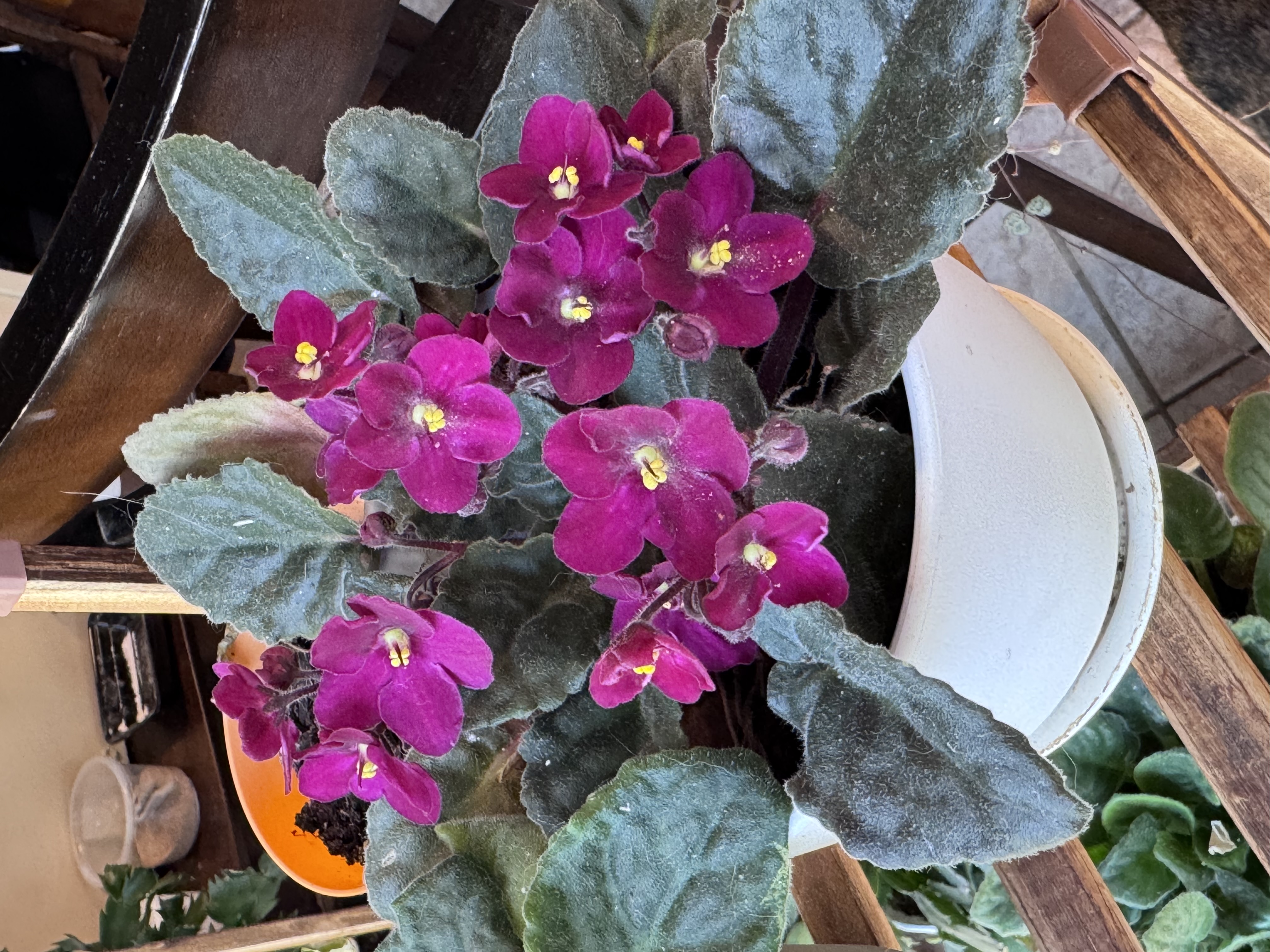
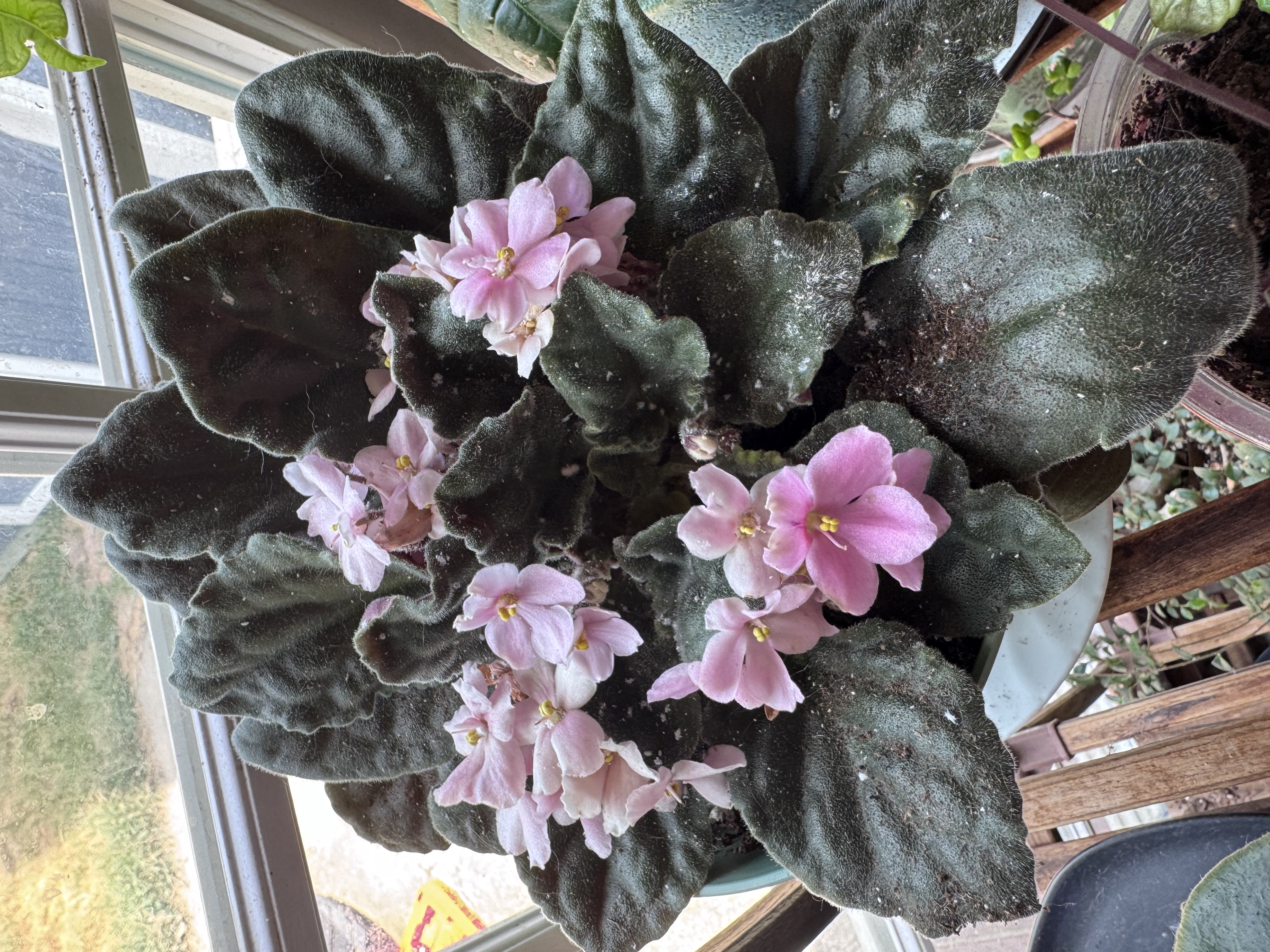
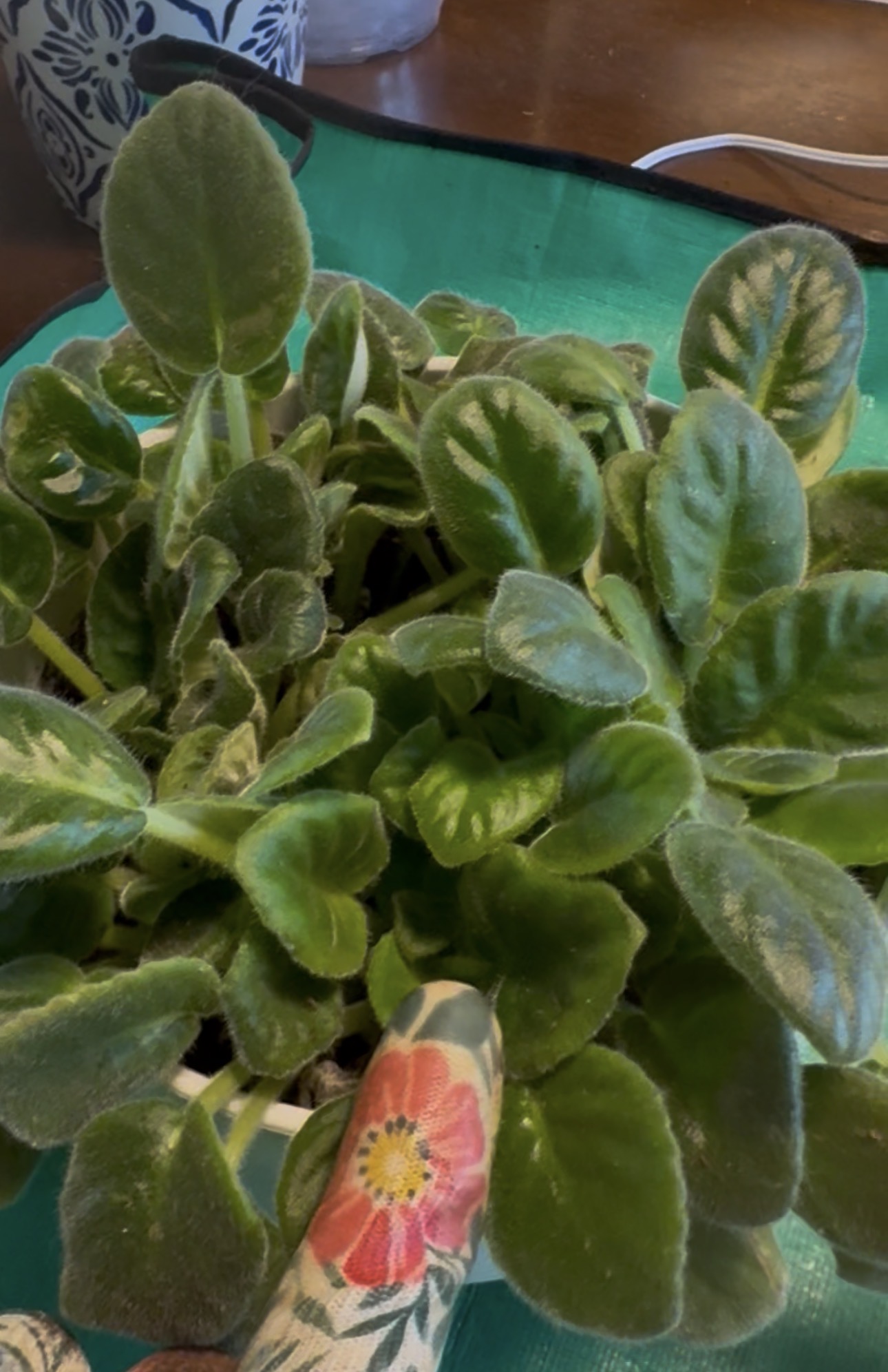
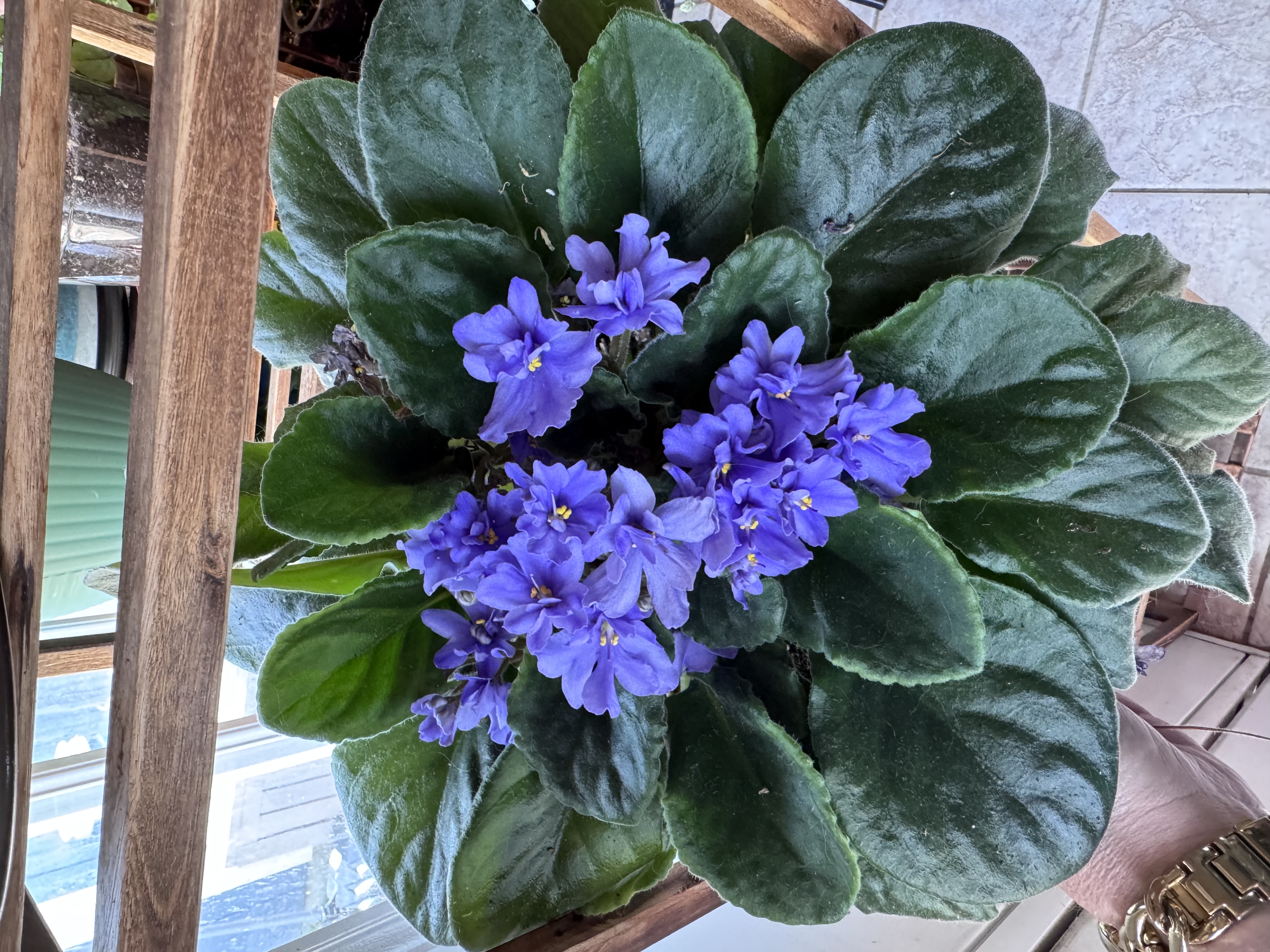
Keep an African violet's fuzzy rosette and flowers healthy with clear light, moisture, and watering cues, plus a look at Amanda's plants.
Rooted Craft Co
African Violet Care
African violets form compact rosettes of fuzzy leaves and can flower several times a year. Give them bright, indirect light, light potting mix, and steady moisture without letting the roots sit in water.
- Light
Give it bright, indirect light. Long, narrow leaves or few flowers can mean it needs more light. Pale or bleached leaves can mean the light is too strong.
- Water
Water when the soil surface feels dry. Use room-temperature water, keep water off the leaves and crown, then let the pot drain completely. Keep the soil lightly moist, not soggy.
- Soil
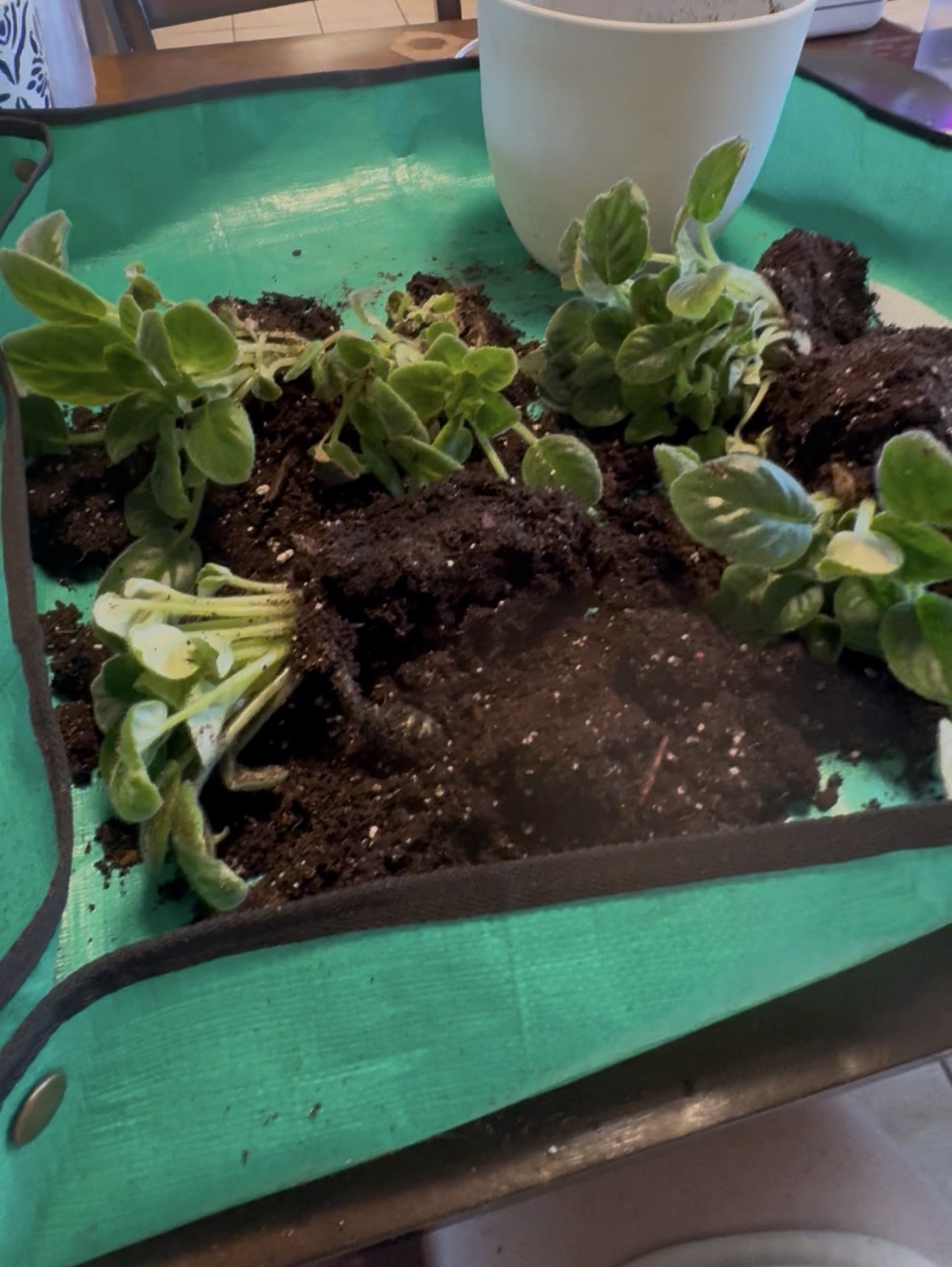
Use a light, well-draining African violet mix. Adding perlite helps keep air around the fine roots. Keep the crown above the potting mix and use a pot with a drainage hole.
- Temperature
Normal indoor temperatures suit this plant. Aim for 60 to 80°F and protect it from cold drafts and very cold water.
- Humidity
African violets prefer moderate humidity. Group plants together or set the pot above a pebble tray, but do not let the bottom of the pot sit in water.
- Common issues
A limp plant with moist soil can point to root rot from overwatering. Leaf spots often come from water left on the leaves. Few blooms and long, narrow leaves can mean low light. Watch for thrips, mealybugs, and cyclamen mites.
Care steps
- Give it bright, indirect light.
- Water when the soil surface feels dry.
- Use room-temperature water and keep the leaves dry.
- Let the pot drain completely after watering.
- Keep it between 60 and 80°F with moderate humidity.
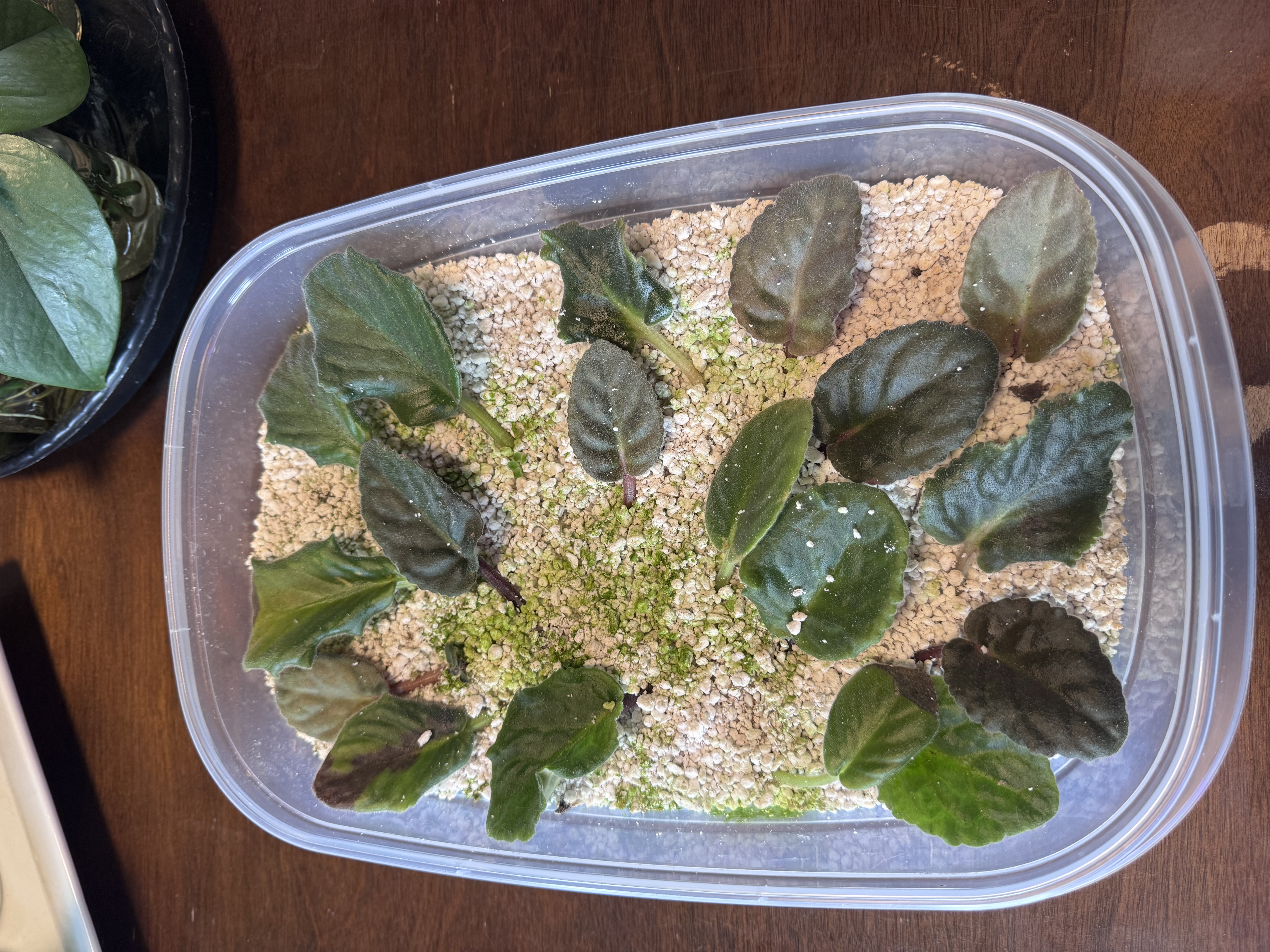
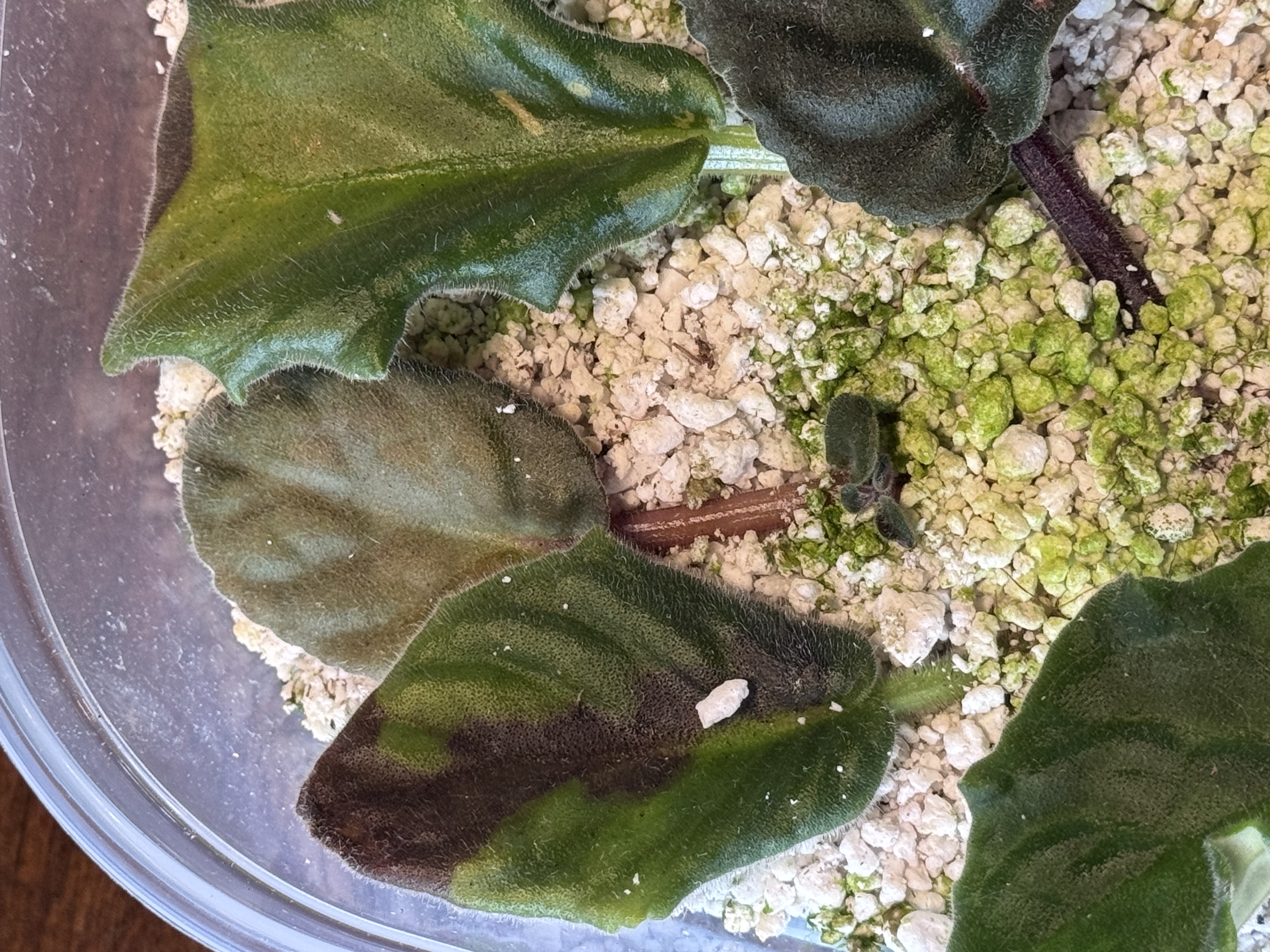
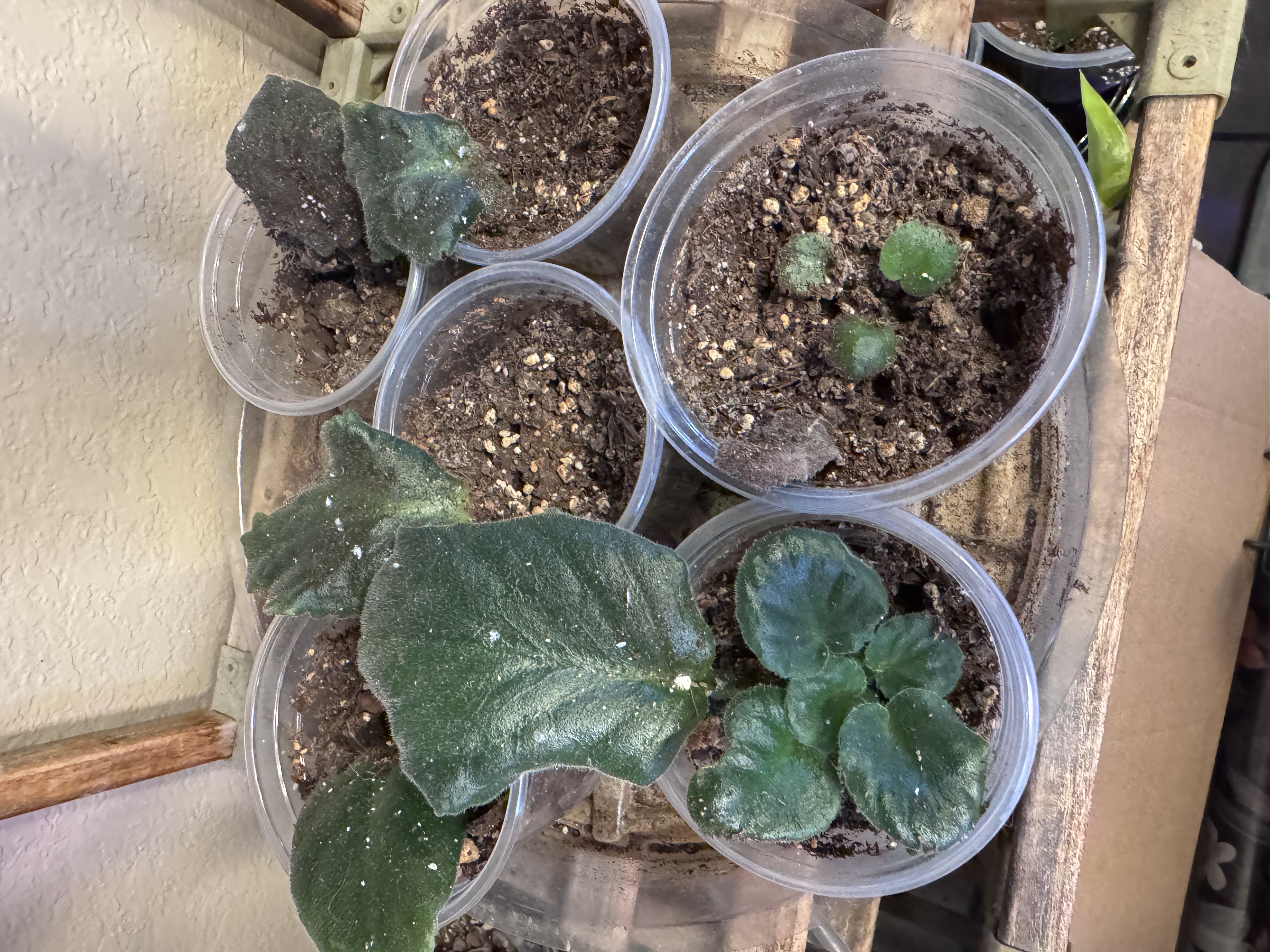
- Check the crown and leaf undersides for pests. Once it is growing well, propagate it from a healthy leaf cutting.
Care Photos
What to Look For
Swipe or scroll through all 8 photos. Open one to see it full size.